


Research

MRL is a multidiscipinary lab, conducting research on additive, subtractive and hybrid of additive and subtractive manufacturing.

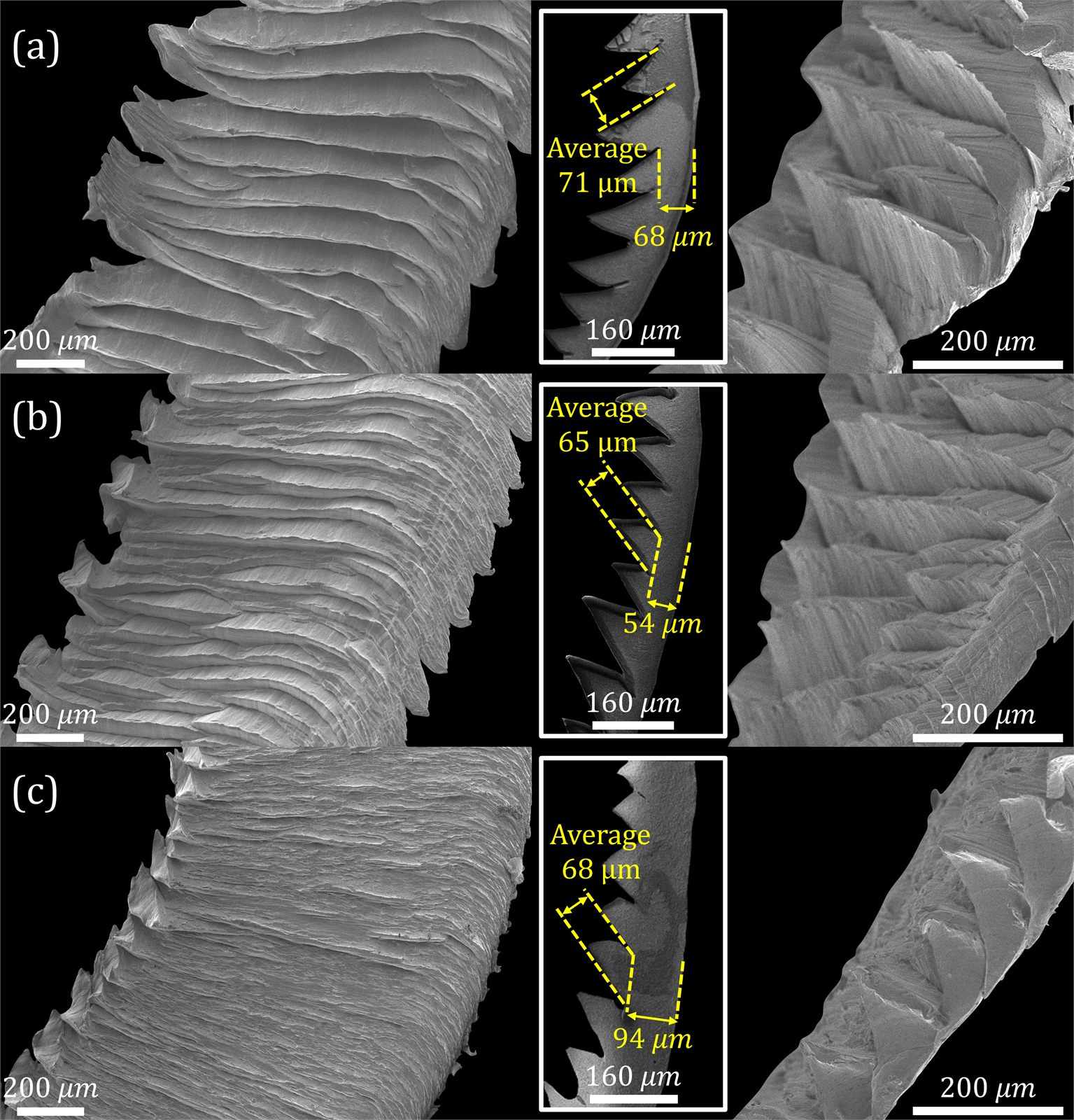
SEM images of chip produced by machining at feed and speed of 0.13 mm/tooth and 50 m/min on (a) vertically
        printed, (b) horizontally printed, and (c) wrought block.

Lab Members

The MRL lab is made up of a diverse group of undergraduate and graduate students, who study a broad range of processing and applications, and relations to industry.

Dr. Hossam Kishawy

Dean of Faculty of Engineering and Applied Science, Professor

BSc, MSc, PhD, P.Eng

Dr. Ali Hosseini

Associate Professor

BSc, MSc, PhD, P.Eng

Latest Publications

Hosseini, A., Valiyan, M., Ghaffar, MA., Saelzer, J., Berger, S., Barari, A., Kishawy, H., Biermann, D. (2026): Effect of process-induced anisotropy on flow stress characterization and chip formation in the machining of extrusion-based additively manufactured stainless steels

Material extrusion additive manufacturing, particularly metal fused filament fabrication (MFFF), is advancing rapidly in industry. However, MFFF parts require post-process machining to meet quality standards. The layer-by-layer nature of MFFF introduces anisotropy, which affects machining performance depending on print orientation. This paper investigates the machining characteristics of MFFF 17-4PH and 316 L stainless steels. Quasi-static tensile tests, split Hopkinson pressure bar experiments, and finite element analysis were performed to determine the Johnson–Cook plasticity and damage parameters for force modeling. …

Haroun, A., Esawi, A., Kishawy, H., Hegab, H. (2025): On machining using nanofluid based minimum quantity lubricant: stability and tool wear analysis

This work investigates the combined effects of multi-walled carbon nanotubes (MWCNTs) weight%(wt%), aspect ratio (AR), and surfactant content on tool wear during MQL machining using nanofluids. While advancements have been made in the application of nanofluids in machining processes, the interplay between these parameters and their influence on both nanofluids stability and tool wear has not been systematically examined. The turning operation of AISI 304 austenitic stainless steel revealed that nanofluid combinations with lower wt% and AR of MWCNTs improved tool wear performance.…

Porrang, B., Ghaffar, MA., Hosseini, A. (2025): Evaluating different methods to measure porosity in fused filament fabricated metals

Metal additive manufacturing (AM) is an emerging technology for producing metallic parts, with metal fused filament fabrication (FFF) technique gaining attention due to its cost-effectiveness. In FFF, a filament composed of metal powder and polymeric binder is deposited layer by layer, followed by debinding and sintering to produce the final part. However, FFF parts often contain microstructural defects, with porosity being one of the most critical ones, as it significantly impacts material properties. Accurate porosity measurement is therefore essential for ensuring part quality. Various methods have been proposed to analyze the microstructure and measure the porosity of AM metals. …

Clarke, T., Hosseini, A. (2025): Enhancing yield prediction of FFF materials with modified Tsai–Wu failure criterion

The shift of additive manufacturing from pure prototyping technology to producing end-use components has raised a new challenge for mechanical design. Efficient design requires a method for predicting the strength of a fused filament fabricated (FFF) material to replace slow and costly trial and error methods. Previous studies have developed models for failure prediction in FFF materials but often only for in-plane stress analysis, not for full 3D. In the current paper, a modified Tsai-Wu (TW) criterion for full 3D failure prediction of FFF poly-ethylene terephthalate glycol (PETG) polymer was implemented both analytically and numerically. …

Sadeghieh, M., Saelzer, J., Hosseini, A., Kishawy, H., Biermann, D. (2025): Look-ahead stress-oriented trajectory planning to improve the strength of fused filament fabricated parts

Fused filament fabrication (FFF) is a promising additive manufacturing method; nevertheless, the mechanical properties of its final products, particularly for end-use applications, still require enhancements. Combining FFF's low cost and well-established technology with enhanced mechanical properties would increase its competitiveness among other additive manufacturing methods. Similar to the well-established subtractive manufacturing methods, the majority of the trajectory planning algorithms developed for FFF, prioritize print time and dimensional accuracy. However, the effect of trajectory planning on the strength of parts produced through FFF has not received adequate attention. …